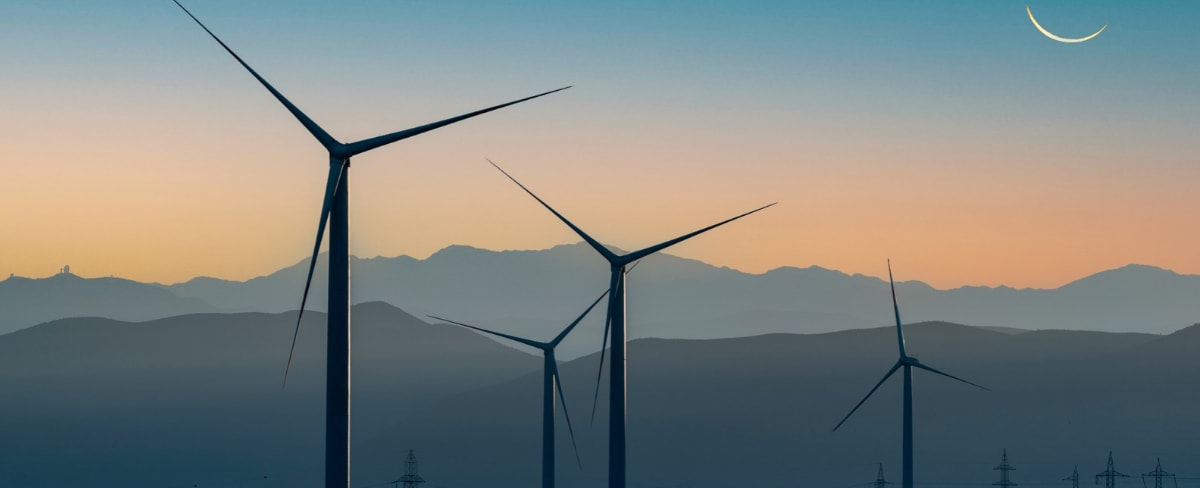
Europe's energy transition has reached a genuine inflection point. For the first time, wind and solar generated more electricity (30.1 percent) than fossil fuels (29 percent) in the EU. Renewables as a whole accounted for 47 percent of EU power generation, with solar alone adding 65 GW of capacity in a single record-breaking year.
However, power generation is only half the equation. Europe’s grids were built for a world of centralized, predictable power flows, not the distributed, intermittent output that characterizes a renewables-dominated system. Now that Europe is producing clean energy faster than it can move or store it, closing this gap demands investment on a scale only private capital can deliver.
Investment numbers underscore this urgency. The European Parliament estimates that transmission and distribution grid development will require US$1.3 trillion by 2040. The investment response is tracking with this secular shift: M&A, greenfield development and project financing in battery energy storage systems (BESS) and transmission are all surging, as dealmakers position themselves for what amounts to a generational infrastructure buildout.
Investment surge
Renewables deal activity in European BESS and transmission ratcheted up in 2025. A total of 323 transactions were announced for a collective US$32.2 billion, according to Infralogic data covering M&A, greenfield and brownfield deals. That represents a 93 percent jump in volume and a 194 percent surge in value year on year—and accounts for nearly half of all cumulative deal value in this space since 2020.
One major deal was the financial close of the Eastern Green Link 2—a 2 GW subsea cable connecting renewable energy generation in Scotland to demand centers in England—which came in at US$4.5 billion, making it the largest subsea electricity transmission project in UK history. Jointly developed by National Grid and Scottish and Southern Electricity Networks Transmission, the project shows the kind of critical infrastructure opportunities that are drawing institutional capital into the sector.
Outside of renewables, the year's defining transmission deals resolved some of Europe's most protracted grid funding crises.
TenneT Germany, the country's largest high-voltage transmission system operator, had spent years seeking a funding solution for its mandatory investment program, after an attempt to sell the business to the German government collapsed in early 2024, on budgetary grounds. The eventual solution paired a €9.5 billion (US$11 billion) equity commitment from a consortium of APG, GIC and NBIM, who will acquire up to 46 percent of TenneT Germany, with KfW's subsequent agreement in February 2026 to acquire a further 25.1 percent stake for €3.3 billion (US$3.8 billion) on behalf of the German government. With closing expected by mid-2026, it represents the largest recapitalization of a European transmission system operator in recent memory.
The year also saw Apollo Global Management commit US$3.7 billion to a joint venture structured around RWE's 25.1 percent stake in Amprion, one of Germany's four electricity transmission system operators. The deal, which closed in November 2025, was widely noted, though its structure—a financing arrangement rather than a straightforward equity sale—reflected the difficulty of attracting conventional equity investment into German grid assets, where the regulator-allowed return on equity has struggled to keep pace with the scale of mandatory investment required.
No letting up in 2026
The first five months of 2026 (up to May 27) suggest that momentum in the sector will remain strong throughout the rest of the year. So far, 135 transactions worth a combined US$12.3 billion have been transacted. These figures already surpass the whole of H1 2025, by 8 percent in volume and 24 percent in value, putting the market on track for another robust year, even before a signature deal emerges.
BESS is commanding an outsized share of dealmaker attention. The largest deal so far this year was a 640 MW Italian solar-plus-storage portfolio developed by Sunprime, combining 290 MW of solar with 350 MW of battery storage, financed at US$585 million.
Elsewhere, Austria-based Enery's 1.5 GW solar-plus-storage project in Romania reached financial close in January, at US$534 million, underscoring the growing appetite for large-scale integrated projects in Central and Eastern Europe. Romania alone is on course to triple its dispatchable storage capacity this year, and Poland and Bulgaria are similarly emerging as the continent's fastest-growing BESS markets. Together, the three markets account for more than 80 percent of the Eastern European pipeline.
On the pure-play BESS side, Allianz Global Investors acquired a 51 percent stake in GESI, a German platform developing 2.6 GW of battery storage across Bavaria and Lower Saxony, one of the largest such portfolios under development in Germany. The three projects, due for commissioning by 2029, are sited at strategically critical transmission network nodes, including former power plant locations. This allows reuse of existing grid infrastructure and reduces both permitting complexity and connection costs.
Beyond pure-play BESS, the quarter also saw significant activity in broader renewables portfolios.
The most notable example is Copenhagen Infrastructure Partners' US$1.7 billion acquisition of Ørsted's European onshore renewables business in February, a portfolio of 825 MW spanning wind, solar and BESS projects across the UK, Ireland, Germany and Spain.
Similarly, reports state that Ardian paid US$2.9 billion to acquire Irish utility Energia Group from I Squared Capital, bringing together renewables generation, flexible capacity, BESS and grid stability services under one platform.
The appetite for diversified portfolios reflects converging pressures. For one, sellers are rationalizing their asset bases to redeploy capital into core businesses, as Ørsted's broader strategic retreat from onshore renewables illustrates. Further, buyers are increasingly favoring portfolios that combine renewables with BESS, as storage integration has become central to underwriting bankable returns in a market where standalone generation faces growing capture-rate pressure.
Deal drivers
The most fundamental driver of investment is the structural mismatch between renewable generation and grid capacity. Solar and wind are intermittent, while demand is far more predictable and constant. As renewable penetration deepens, with the EU's battery fleet having expanded tenfold since 2021 to 77.3 GWh, both are becoming increasingly vital.
Policy is catching up. The EU's late-2025 Grids Package aims to accelerate grid build-out and streamline permitting across member states, while the UK and Poland are already implementing reforms that prioritize grid connection readiness. The bloc’s REPowerEU strategy targets provide a sustained backdrop, and the introduction of a dedicated commissioner for defense and space, alongside growing political momentum behind energy sovereignty, has elevated the strategic importance of domestic infrastructure in ways that are directly translating into deal activity.
Data center growth is adding another layer of demand. The link between digital and energy infrastructure is now a recurring theme in dealmaker rationale: Ardian, for example, explicitly cited Energia's partnership with Microsoft on a 165 MW Dublin data center as part of its investment thesis. Data centers require large, uninterrupted power supplies, which is exactly the kind of demand that makes the business case for BESS and transmission investment most compelling.
The investor base is also broadening. Large utilities were the first movers in European BESS for strategic reasons, but that early track record has since opened the asset class to private institutional capital at scale. BESS has matured from an emerging technology with uncertain returns to one with real-world performance data and proven economics, with more deals expected in this space for years to come. Tier-one suppliers are now offering performance warranties extending up to 20 years and underpinning project finance structures.
Friction points
The investment case is strong, but not frictionless. For BESS, the central challenge is revenue visibility. Ancillary service markets, historically the primary income stream for BESS, have matured and in some cases saturated. Operators are increasingly dependent on energy price arbitrage, which is inherently more volatile and harder to underwrite at the project finance stage.
In Germany and France, frequency containment reserve markets have seen significant price compression as installed capacity has outpaced demand. This has forced investors toward more complex, multi-market revenue strategies. On the manufacturing side, over 90 percent of the EU's battery cell production capacity is oriented toward electric vehicles rather than stationary storage, leaving the supply chain for grid-scale BESS applications exposed to shortages and price swings.
For transmission, the challenges are different but no less significant. Most transmission networks across Europe are subject to strict regulatory frameworks governing ownership and operation, which means there are simply very few or limited assets available to buy. When assets do come to market, the dynamics vary considerably by jurisdiction: In Germany in particular, the regulator-allowed return on equity has been a persistent constraint, making it difficult for sellers to attract competitive bids and contributing to protracted funding difficulties.
Cross-border transactions face a further layer of scrutiny. Energy infrastructure is now a mandatory screening sector under the EU's revised FDI Screening Regulation, agreed in December 2025 and expected to take effect in mid-2026. The new framework mandates screening mechanisms across all member states for investments in critical energy, closes loopholes around EU-based entities under non-EU control, and introduces call-in powers for non-notified transactions up to five years post-closing. The UK operates its own parallel regime under the National Security and Investment Act, which similarly captures energy infrastructure.
A maturing market
Energy is not alone in facing this heightened FDI scrutiny. The same rules apply to transport and digital infrastructure, advanced technologies and critical raw materials, as part of a broader tightening of investment oversight across strategically sensitive sectors. That BESS and transmission now sit alongside defense and semiconductors on the screening list is, in many ways, a measure of how far the asset class has come.
BESS and transmission have moved from the edges of the European infrastructure market to its center, and the conditions behind that shift remain firmly in place. Renewables penetration is deepening to meet the EU’s ambitious goals, grid bottlenecks are mounting and data center demand continues to rise. The asset class has matured enough to attract institutional capital at scale. The question now is whether the supply side—developable assets, grid connections and permitting capacity—can keep pace with the weight of capital seeking deployment.
The cables that carry Europe's renewable power, and the batteries that store it, have become some of the continent's most sought-after infrastructure assets. With the investment case made, what remains is the race to build.